News -
Dehesa Monteros and Uskar restaurant celebrate Book Day in Madrid
Find out more


There's a deeply ingrained idea in our gastronomic culture: Iberian ham is a product associated with Christmas, family celebrations, and the colder months of the year. However, those who know the product best tend to agree on a statement that is as simple as it is revealing: Ham is especially enjoyable in the summer.. It's not a matter of habit. It's a matter of nature.
One of the characteristics that sets the Iberian pig apart is its extraordinary ability to develop marbling in the muscle. This fat, rich in oleic acid, is responsible for much of the texture, aroma, and sensory complexity that make 100% acorn-fed Iberian ham unique. And this fat has a distinctive feature: it has a lower melting point than that of other pig breeds.
What does this mean?
As the ambient temperature rises, the fat begins to melt naturally. It becomes shiny, honey-like, and silky. The aromas are released more easily, and the flavor is expressed with greater intensity and balance. That's why there's a popular saying among Iberian ham enthusiasts: «No ham is bad in summer.». Even more modest cuts improve their behavior when the fat reaches a suitable temperature. In large acorn-fed hams, this transformation reaches its peak.
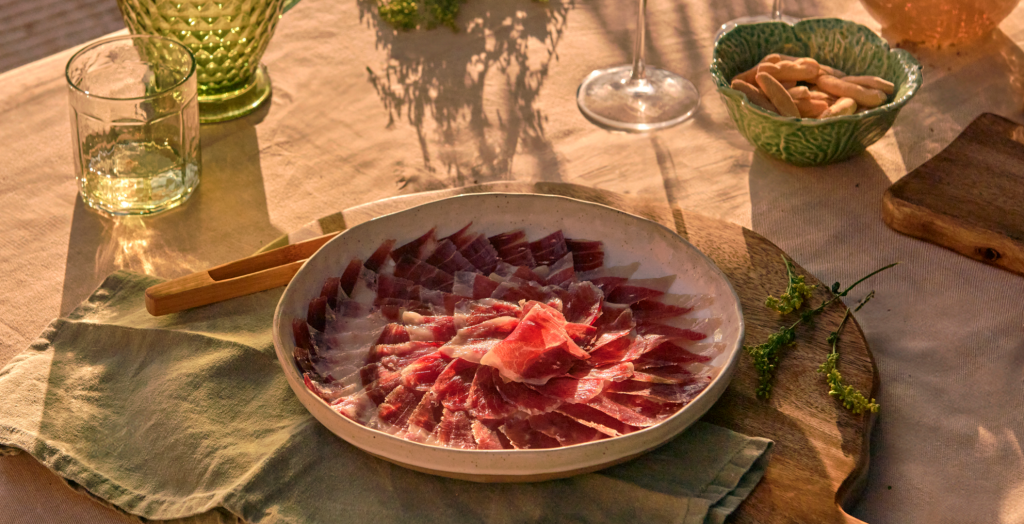
During the summer months, we tend to look for lighter foods, linger over long post-meal conversations, and enjoy outdoor snacks. Iberian ham fits naturally into this context. It requires no preparation, pairs well with white wines, fino, manzanilla, or sparkling wines, and allows for a complete gastronomic experience in just a few minutes. A board of Iberian products under the shade of a terrace or by the pool can become one of the season's greatest pleasures.
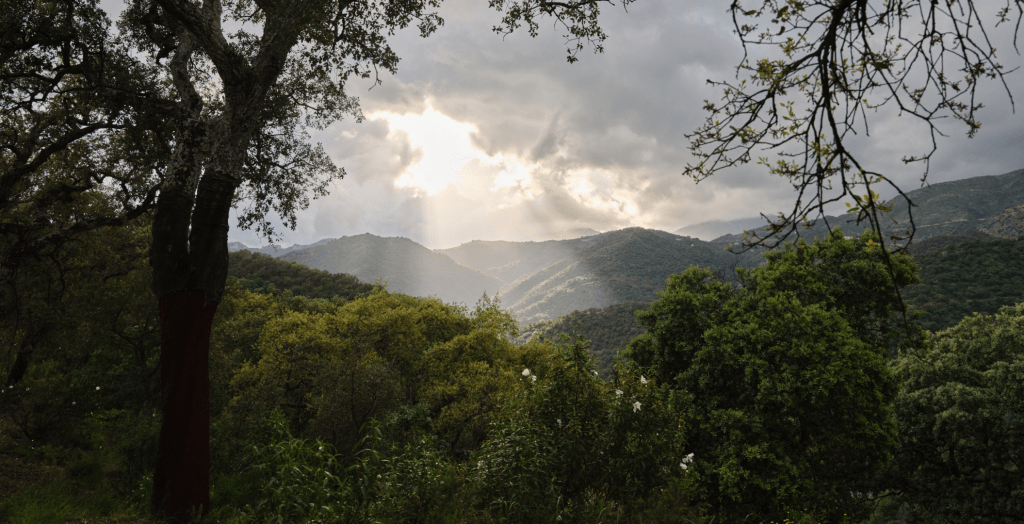
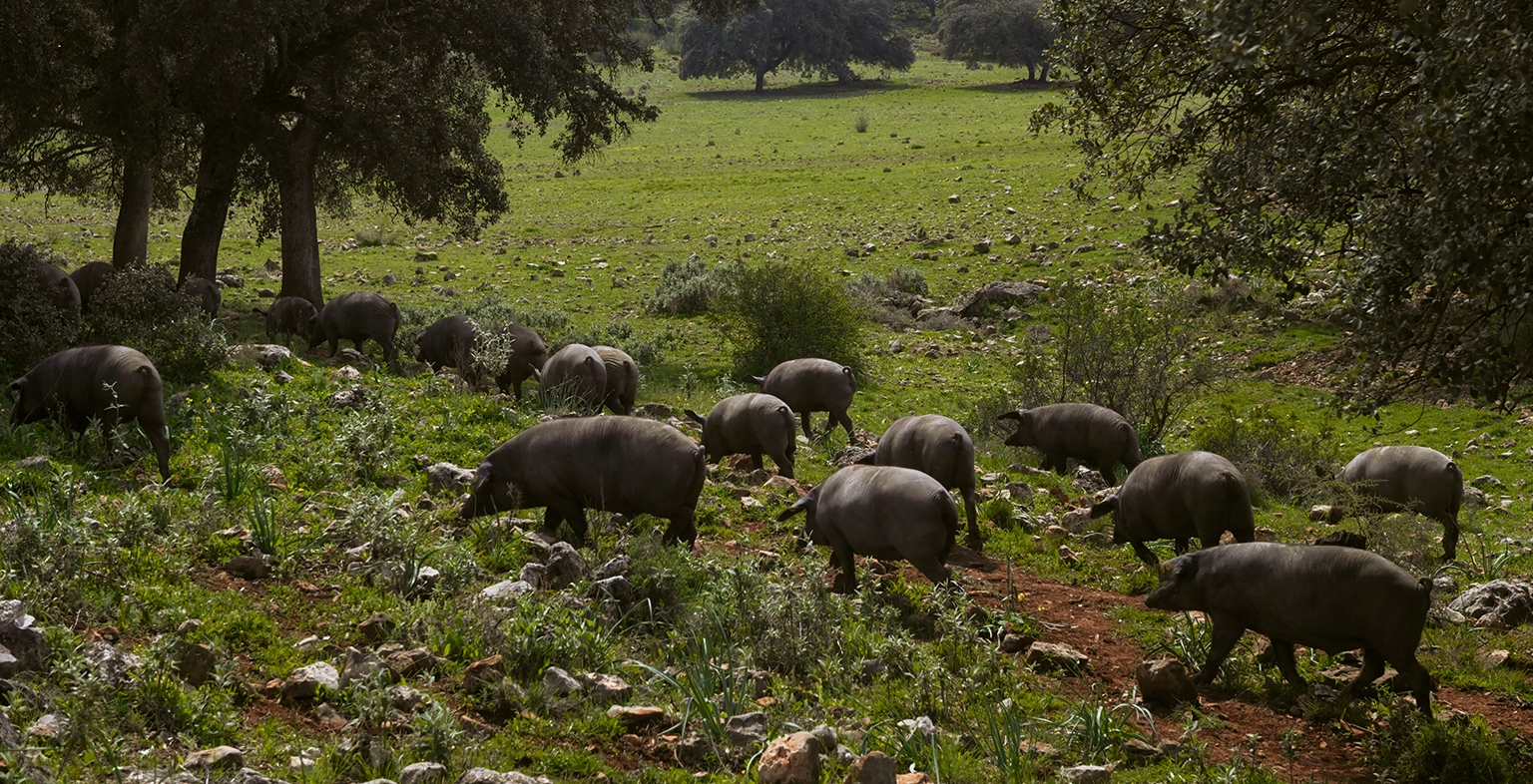
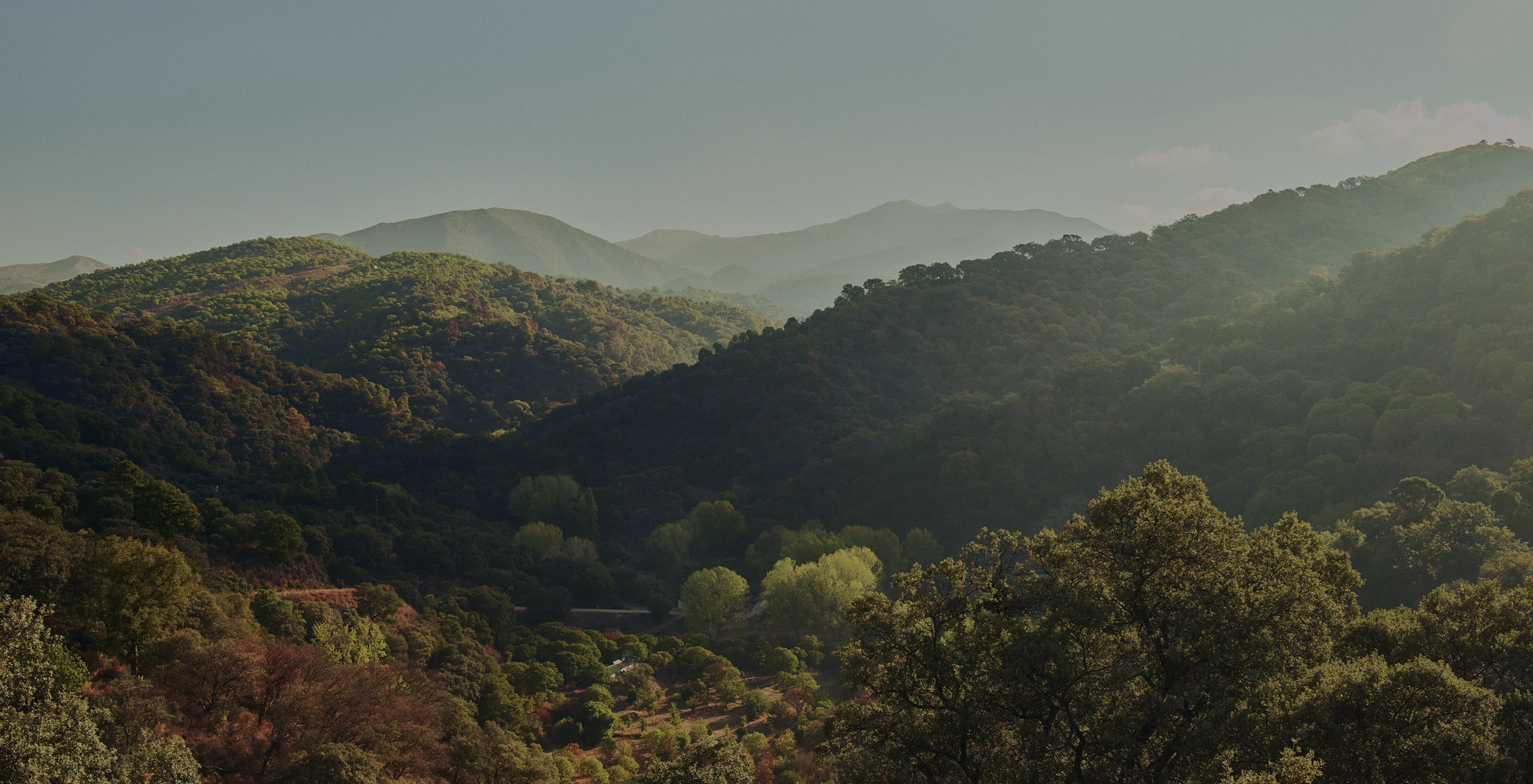
At Dehesa Monteros, there is also a distinguishing factor that directly influences the quality of that fat. Our 100% Iberian pigs are raised free-range in the pasture-covered hills of Serranía de Ronda, a region of steep slopes and untamed wilderness that demands agile, hardy animals of purebred stock.
There are no large, flat pastures here. Our animals traverse rugged terrain daily, which is part of their upbringing and contributes to the development of exceptional fat.
Before the acorn-fed period, something unique happens in our land. The Genal Valley is the second largest chestnut producing area in Spain. Between September and October, when ripe chestnuts fall to the ground, our animals enjoy a natural diet that precedes the traditional acorn-fed period. This is what we know as chestnut pre-harvest.
During this period, each animal can consume around 100 kilos of chestnuts, a fruit that adds sweet nuances and perfectly complements the more intense and slightly astringent character of the acorn. The result is a more balanced, elegant, and persistent Iberian ham. Its fat, rich in oleic acid, melts easily and, especially in summer, shows its full potential.

Perhaps the time has come to break some habits. Iberian ham is not just a product for December. It's a product to be enjoyed when the temperature allows nature to do part of the work: releasing aromas, softening textures, and revealing all the complexity that an exceptional piece holds within.
Because if there is a time of year when fat reaches its maximum expression, that time is summer. And few fats tell as unique a story as that of our Iberian pigs from the Serranía de Ronda.