News -
El arte de regalar Ibéricos de Alto Nivel está en los detalles
Find out more
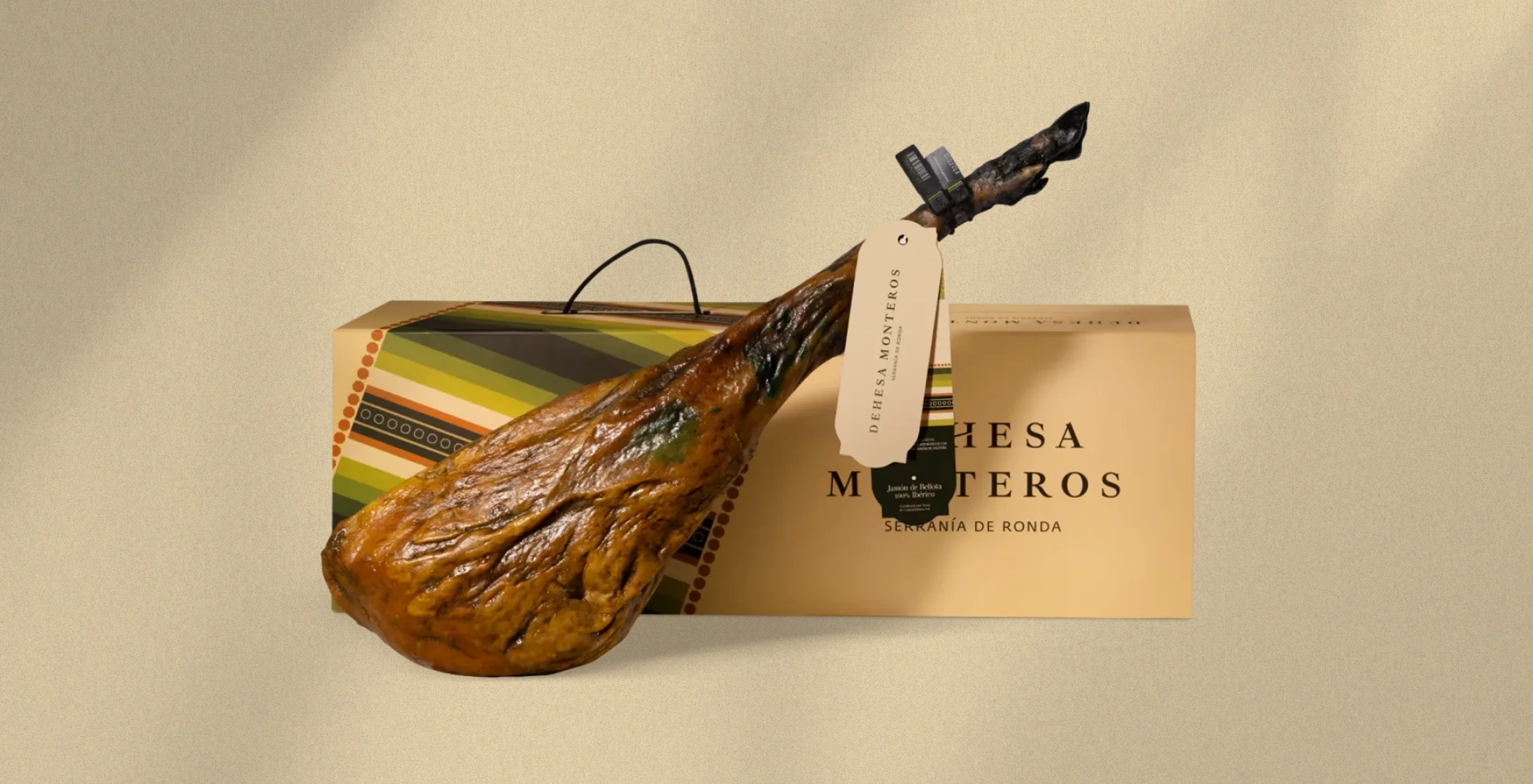
The national newspaper El País reports on our company and our business model.
The red-haired pig that triumphs in Asia
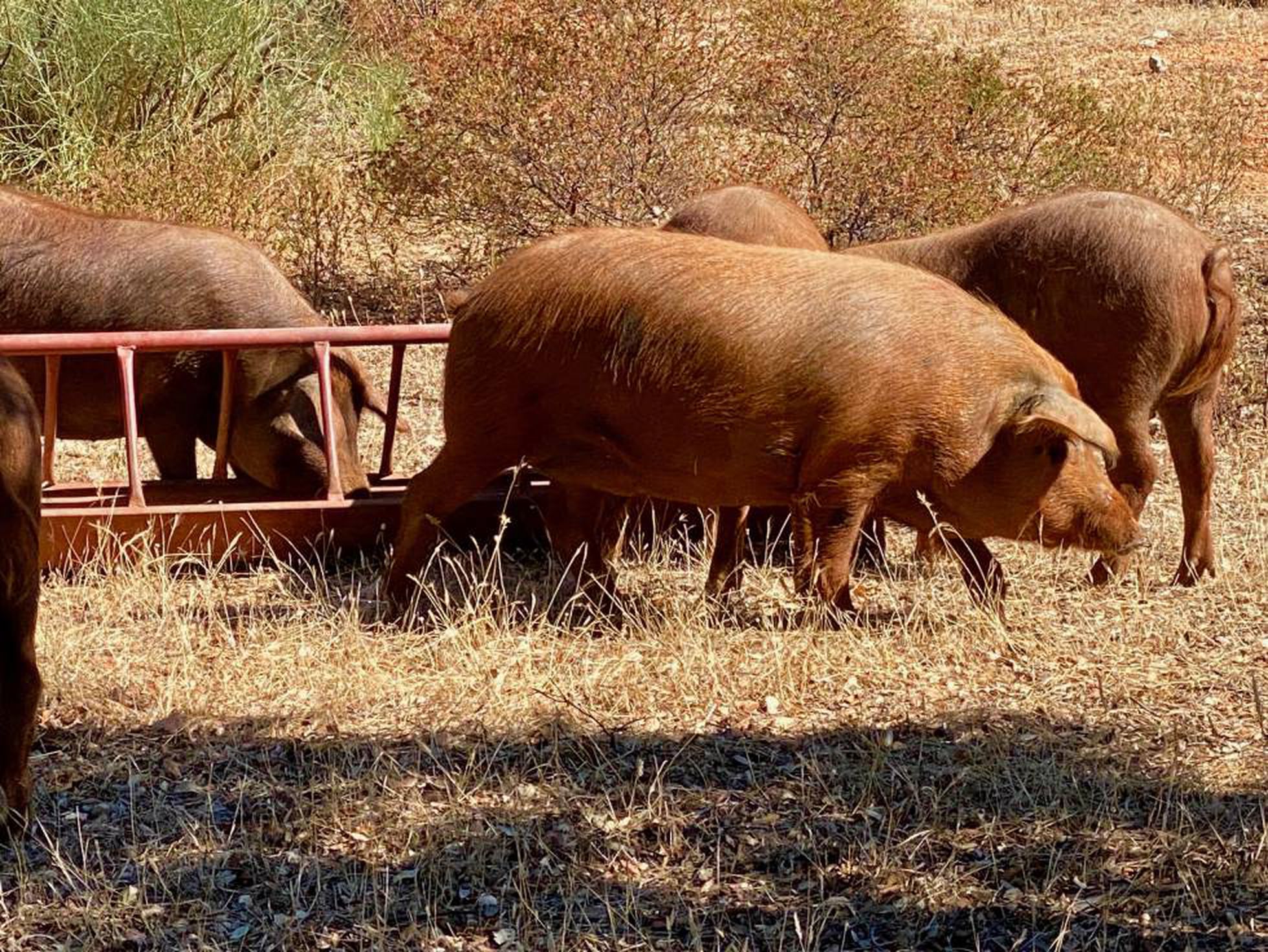
In Ronda there is a pig with red-haired bangs. It has sturdy legs to scamper through the rugged mountain range and short legs to make itself invisible among the rockroses and matagallos of the pasture. It breathes, it is flesh and blood, but its presence seems ghostly: it belongs to an officially extinct lineage. The theory says it does not exist, its genealogical book was closed years ago. Practice proves otherwise. Before its disappearance, a local family decided to search for the last living specimens. From a handful of animals a decade ago, it has grown to about 200, which are now exploited commercially and exclusively by The Dehesa of the Monteros.
The Malaga firm has found a gold mine in this animal, known as dorado gaditano or dorado rondeño. Its ham is marketed at 100 euros per 50 grams and most of it ends up in Asia. “It is unique in the world and you have to pay for it, although its cost is also due to the fact that raising it and curing its meat requires more investment,” says Chelo Simón, matriarch of this family business that had a turnover of 800,000 euros in 2020 and expects to reach one million in 2021 thanks to increased exports.
The journey has not been easy for this venture, nor has it been easy for the golden pig to be resurrected. The story of two rural women had to cross in 2016 to achieve the miracle. The first is that of María Sánchez, who in 2001 acquired the La Algaba farm in Ronda, where she launched a “romantic livestock” project to recover endangered Andalusian species. Through his lands passed the Cardena and Pajuna cows, the Grazalema Merino sheep and, in 2008, the Cádiz golden sheep, “whose situation is much worse than that of the Iberian lynx”. She had two mothers and a boar, but she scoured the whole area until she found another eight specimens. To walk carefully, she had the support of genetics specialists from the University of Córdoba (Uco). Years later, there were a hundred specimens, whose maintenance became more expensive ... (continued)
To read the original article, you can click here.